Tuner Z - Track Days
Notraction GamesRacing
4.173.00 Reviews
- Version
- 0.9.6.4.9
- Installs
- 50.00K
- Age Rating
- Everyone
Screenshots
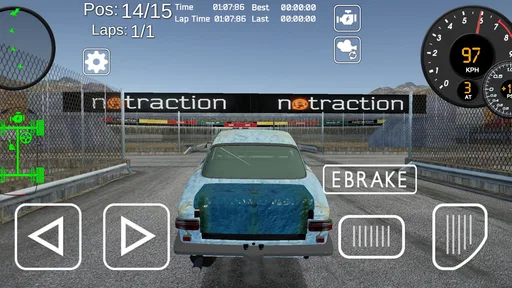
Our Review of Tuner Z - Track Days
 Analysis by Appyee
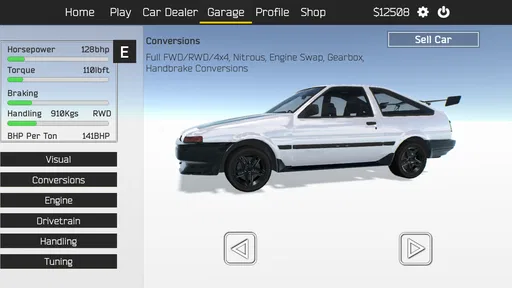
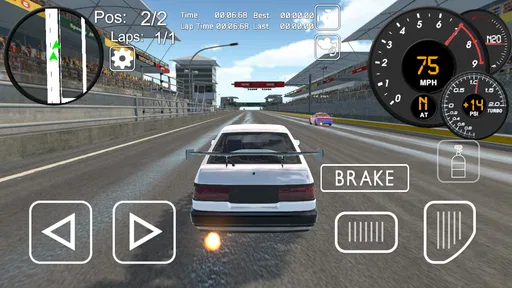
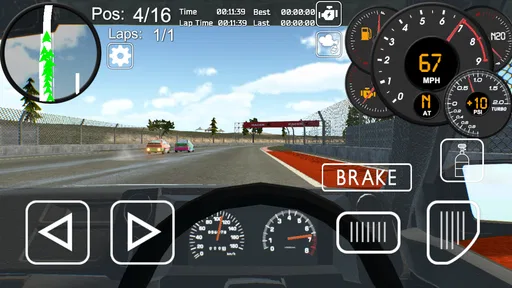
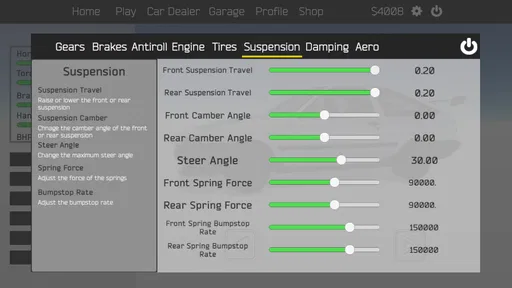
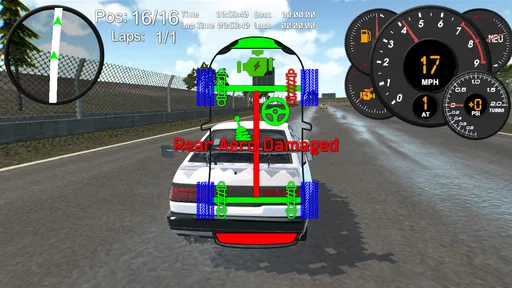
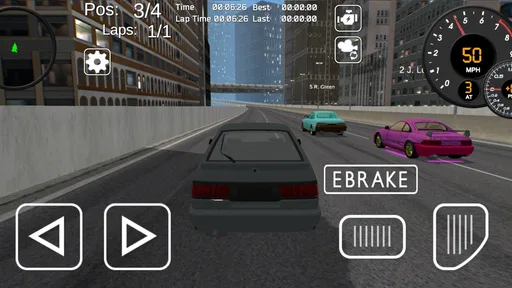
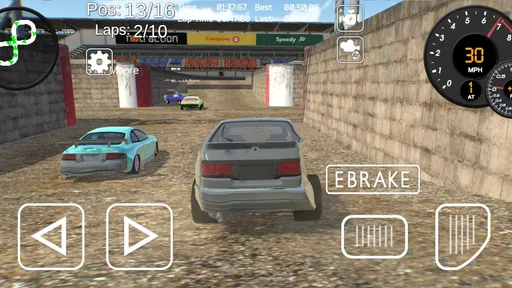
I approached Tuner Z - Track Days as a racing game for people who enjoy adjusting a car as much as driving it. That distinction matters. Many mobile racers are built around quick events, automatic upgrades, and a constant push toward the next unlock. This one presents itself as a fuller tuning and racing simulator from Notraction Games, so the appeal is less about a few minutes of effortless arcade action and more about experimenting with how a car feels after changes.
My first impression is that it sits in an interesting middle ground. It is accessible enough to be listed for Everyone, yet the tuning focus gives it more patience and curiosity than a simple traffic racer. You can download it for free, which makes trying the driving model easy, but optional purchases range from $1.49 to $10.99 per item. I would therefore judge it less like a disposable arcade game and more like a garage project: worthwhile if you enjoy learning through trial and error, less convincing if you only want instant speed.
What to consider before choosing this racing game
The most important question is not whether you like racing games in general. It is whether you like the decisions around racing. In my experience, a tuning-focused title asks you to pay attention to the relationship between your setup and your driving. If you enjoy making a change, testing it, noticing a weakness, and adjusting again, Tuner Z - Track Days has a clear reason to exist. If you prefer a game that handles all preparation automatically, its central idea may feel like work.
I would also consider how you normally play on a phone. This is not the kind of game I would choose blindly for a short queue if I wanted immediate variety. Its strongest moments come when I give myself enough time to understand what the car is doing. That makes it a better fit for a focused session at home than for someone seeking a purely casual racer that can be played with almost no attention.
The game is free to start and supports devices running Android 9 or later. That is useful for players with reasonably modern phones, although anyone using older hardware should check compatibility before getting invested in the idea. The current version is 0.9.6.4.9, and the project has been available since April 6, 2020. Those details suggest a game with an established presence rather than a brand-new experiment, but I still recommend treating it as a simulator-style hobby rather than a guaranteed replacement for a large console racing game.
Its audience is also easier to define than the broad Racing label suggests. A player who likes visual customization, mechanical experimentation, and repeated test runs is likely to find more depth here than someone who only wants licensed cars, cinematic presentation, or a huge collection of instantly recognizable events. I would use the usual alternatives in the category as a comparison point, but not assume that every racer is trying to solve the same problem.
The tuning mindset changes how each race feels
The best way to approach the game is to stop treating every run as a final exam. I found it more useful to see each race as feedback. If the car feels unstable, accelerates too slowly, or fails to behave as expected through a corner, that result tells me what to investigate next. The practical tip is to change one aspect at a time whenever possible. Adjusting everything together may produce a faster result, but it also makes it difficult to know which decision actually helped.
That approach gives the game a small learning loop that a generic store description would not communicate. The real reward is not simply reaching the finish line. It is building a mental connection between a setup choice and the car’s response. Even without treating the game like a serious motorsport tool, this makes ordinary progress feel more personal than a simple upgrade button would.
I also recommend keeping a mental baseline. Before experimenting, make a run with the setup you already have and remember where the car feels comfortable or troublesome. Then test a change under similar conditions. Without that baseline, it is easy to mistake a clean run for a better setup when the difference actually came from a more careful drive. This is one of the reasons the game can appeal to patient players: improvement depends partly on observation, not only on collecting stronger parts.
Why its focused scope can be a strength
Tuner Z - Track Days wins when I want a racing game organized around the car itself. The tuning theme gives each session a purpose beyond repeating the same race. Instead of asking only, “Can I go faster?”, it encourages questions such as, “Why does this car feel difficult here?” and “Should I change the setup or change my driving?” That extra layer is valuable for players who are bored by racers where progress is mostly a straight line of better equipment.
Its free entry also lowers the risk of trying that style. You do not need to commit money before discovering whether the handling and garage-oriented structure suit you. I would still keep an eye on the purchase prompts, especially if you are the kind of player who dislikes being nudged toward spending during progression. The fact that items cost between $1.49 and $10.99 means the game can remain accessible while still asking you to make deliberate decisions about optional spending.
Another advantage is that the game can serve different levels of interest. A newcomer can begin by learning what feels comfortable and gradually become more analytical. A more experienced mobile racer can use the tuning focus to create personal challenges, such as trying to make a difficult car easier to control rather than simply chasing the highest possible performance. That flexibility is more interesting to me than a game that offers complexity only through a large menu.
Small habits that make the garage more useful
One useful habit is to separate setup problems from driving problems. If I enter a corner too quickly, a poor result does not automatically mean the car needs an adjustment. I first try a calmer approach and a cleaner exit. If the same issue remains after several careful attempts, then tuning becomes a more sensible response. This prevents the common mistake of changing the car to compensate for a mistake that better timing would solve.
A second habit is to value consistency before maximum speed. A setup that produces one excellent run but feels unpredictable in every other attempt may be less useful than a slightly slower arrangement that I can repeat. For a mobile game, this is especially practical because short sessions can make experimentation feel rushed. Consistency gives you a clearer sense of progress and helps reveal whether a change is genuinely useful.
I would also avoid spending immediately simply because an item appears attractive. Play long enough to learn what part of the experience you enjoy: driving, tuning, collecting, or simply testing different ideas. If the garage work is the main attraction, optional purchases may feel more meaningful later. If the driving itself does not click, spending will not solve that basic mismatch.
Where a conventional arcade racer may fit better
There are clear situations where I would recommend a different type of racing game. If your ideal session is a burst of fast action with forgiving controls, an arcade racer is probably a better choice. Those games usually make the first few minutes more immediately exciting because they reduce the need to understand setup decisions. Tuner Z - Track Days asks for more involvement, and that involvement can feel slow when you are tired or only have a moment to play.
I would also look elsewhere if presentation is your highest priority. Players who want a large, polished spectacle with extensive licensed content, dramatic events, or a broad social ecosystem may be happier with a major mainstream racing series. I am not dismissing this game for being focused; I am pointing out that its value comes from the tuning-and-driving relationship, not from trying to cover every possible racing fantasy.
There is another trade-off for people who enjoy collecting. A collection-heavy alternative may provide a stronger sense of constant reward through new vehicles, visual items, or event milestones. Here, the satisfaction is more dependent on what you do with the car you have. That can be refreshing, but it also means players who measure progress mainly through unlocking may find the experience less compelling.
Finally, anyone who dislikes in-app purchases should decide how much tolerance they have before starting. Because the game is free and includes purchasable items, I would not recommend it to someone who wants a completely purchase-free experience by default. The better match is a player who is comfortable enjoying the starting experience first and making a careful choice later, rather than assuming every available upgrade is necessary.
What switching to this game really involves
The cost of switching is mostly mental rather than financial. Moving from a conventional arcade racer means giving up some instant clarity. In an arcade game, a loss often tells you to drive faster, brake later, or use a special move. In a tuning simulator, the same loss may require you to decide whether the problem is your line, your timing, or the car’s setup. That extra diagnosis is the main adjustment a new player should expect.
There is also a time cost. You may spend a session testing and learning rather than unlocking something dramatic. I consider that a fair exchange when the player enjoys the process, but it can feel unrewarding if you use racing games primarily for quick progression. My advice is to begin with a simple goal for each session: understand one handling problem, compare one change, or complete a clean run. That keeps the game from turning into unfocused tinkering.
The financial side is easier to manage if you treat the free version as an evaluation period rather than a promise that every option will remain equally convenient. Play until you know whether the core driving and tuning loop are enjoyable. Only then consider an optional item. This workflow protects you from paying to overcome boredom, which is never a good reason to spend in a racing game.
For families, the Everyone rating makes the game broadly approachable from an age-label perspective, but I would still explain the optional purchase system before handing over a device. The rating answers one question about suitability; it does not replace a conversation about spending. That is a practical distinction parents often need when choosing free-to-start games.
Who will get the most from the experience
I think the strongest audience is the player who enjoys cars as systems rather than just as fast shapes on a screen. You do not need to be a real-world mechanic or a motorsport expert. You do need some patience and a willingness to notice patterns. If you like replaying a run to understand why it went wrong, the tuning focus gives that repetition a purpose.
It is also a good candidate for someone who has grown tired of racers that feel interchangeable. The combination of free access, a simulator angle, and a garage-centered mindset makes it more distinctive than a basic point-to-point game. Its average rating is 4.1 from around 682 ratings, with roughly 73 written reviews, and it has passed 50K installs. I read that as a modest but meaningful sign that the concept has found an audience, while also reminding myself that it is a focused title rather than a universal favorite.
On the other hand, I would skip it if I want a relaxed game that never asks me to think about why the car behaves a certain way. I would also skip it if I need a large, highly social racing world or if I am unwilling to navigate optional purchases in a free game. Those are not minor preferences; they directly affect whether the central loop feels engaging or inconvenient.
My recommendation after weighing the alternatives
My recommendation is to try Tuner Z - Track Days if you are curious about the space between arcade racing and a more deliberate simulator. Start free, make small changes, compare your runs, and give the handling enough time to reveal its character. The game is at its best when I approach it as a workshop with races attached, not as a nonstop reward machine.
I would not call it the safest choice for every mobile racer. Players who want instant action, a huge content catalogue, or a completely hands-off progression system should choose a conventional alternative instead. But for a patient car enthusiast, the focused design is exactly the point. The deciding factor is whether tuning feels like play to you, rather than preparation you want to skip.
In the end, I see this as a worthwhile free racing game with a specific personality. Notraction Games has aimed at players who want to feel involved in the car’s behavior, and that gives the title more character than its short store summary suggests. I would recommend installing it with modest expectations, resisting early spending, and judging it after several thoughtful test runs. If you enjoy turning a disappointing lap into a useful lesson, it may become one of those games you return to for the satisfaction of making a car feel right.
Verdict
Strengths of Tuner Z - Track Days
- Accurate tuning tools help prepare cars for different track conditions.
- Track-focused features make it useful for serious driving enthusiasts.
- Clean interface keeps key setup information easy to find.
- Can help drivers understand how setup changes affect handling.
- Useful companion for planning upgrades and improving lap consistency.
Limitations of Tuner Z - Track Days
- May feel too specialized for casual drivers or non-track vehicles.
- Some features may require familiarity with suspension and racing terminology.
- Results depend on entering accurate vehicle and setup information.
- Limited value if you do not regularly attend track days.
- Advanced options can take time to configure and understand.
Similar Picks in This Category
View All
Hill Climb Racing
Fingersoft4.3

Dr. Driving
SUD Inc.4.2

Traffic Rider
skgames4.5

Asphalt 8 - Car Racing Game
Gameloft SE4.6

Race Master 3D: Car Racing
Beresnev Games4.6

Extreme Car Driving Simulator
AxesInMotion Racing4.3
Frequently Asked Questions
What is Tuner Z - Track Days?
Tuner Z - Track Days is a driving and car-customization game focused on track-day experiences. Players can build and personalize performance cars, adjust their setups, and take them onto circuits to test speed, handling, and acceleration. It is aimed at fans of tuning culture and racing games who enjoy improving a vehicle as much as competing on the track.
Can I customize and upgrade cars in Tuner Z - Track Days?
Yes. Customization is one of the main attractions of Tuner Z - Track Days. Depending on the available progression system, you can modify the appearance of your vehicle and improve important performance areas such as power, handling, braking, and grip. These changes are not only cosmetic, since a poorly balanced setup may make a car faster in a straight line but harder to control through corners.
Does Tuner Z - Track Days require an internet connection?
The connection requirements may depend on the version and device you are using. Some parts of the game may work offline, particularly basic driving or previously unlocked content, while advertisements, cloud features, updates, or online services can require internet access. It is best to launch the game once while connected and check its in-game requirements before relying on it for offline play.
Is Tuner Z - Track Days suitable for beginners?
Tuner Z - Track Days can be enjoyed by newcomers, but players unfamiliar with racing games may need some time to adapt. Track layouts, braking points, vehicle tuning, and throttle control all affect performance. Starting with a stable car setup is recommended instead of immediately maximizing engine power. Practicing corners and learning how each upgrade changes the car makes progression more manageable.
Is Tuner Z - Track Days free to download, and are there in-app purchases?
The download model can vary by platform and region, so you should confirm the current listing in the Google Play Store or Apple App Store before installing. If the game is free to download, it may include advertising, optional purchases, or progression-related offers. Review the store information and your device’s purchase settings, especially if children will be playing, before approving transactions.
Play our best games!


